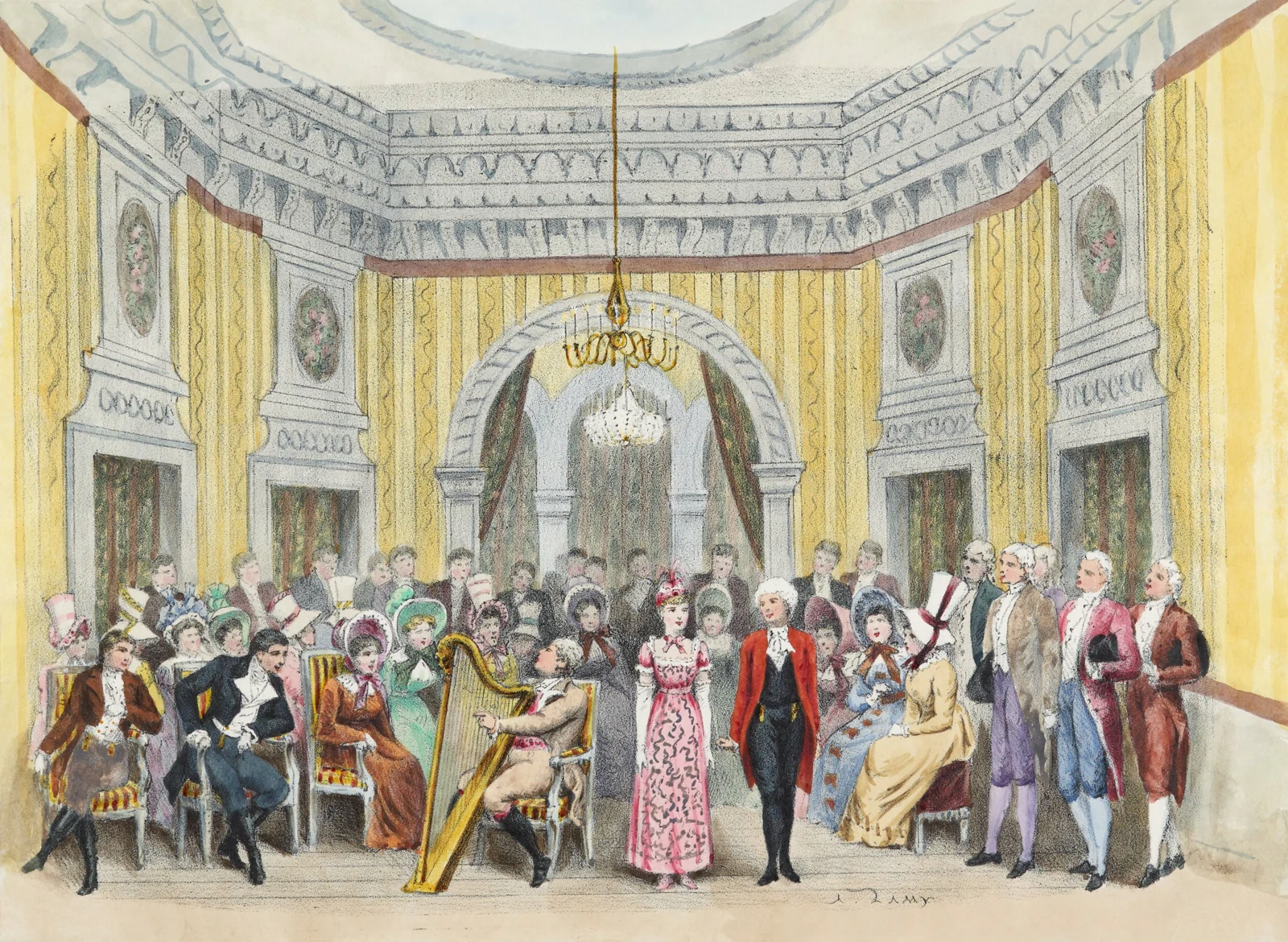
1816 · projection
The human can supply the missing personality
The Sandman notices something companion technology still exploits: if we want to believe, we do part of the emotional work ourselves.
Myth, literature, film, television, music, manga and games
Love robots arrived in stories long before engineers could build one. Across two millennia, the same questions keep returning: who gets to design the ideal partner, what obedience costs, whether memory creates identity, and what happens when something bought as a product develops preferences of its own.
Minor spoilers throughout. A history of artificial personhood inevitably gives away which machines start behaving like people.
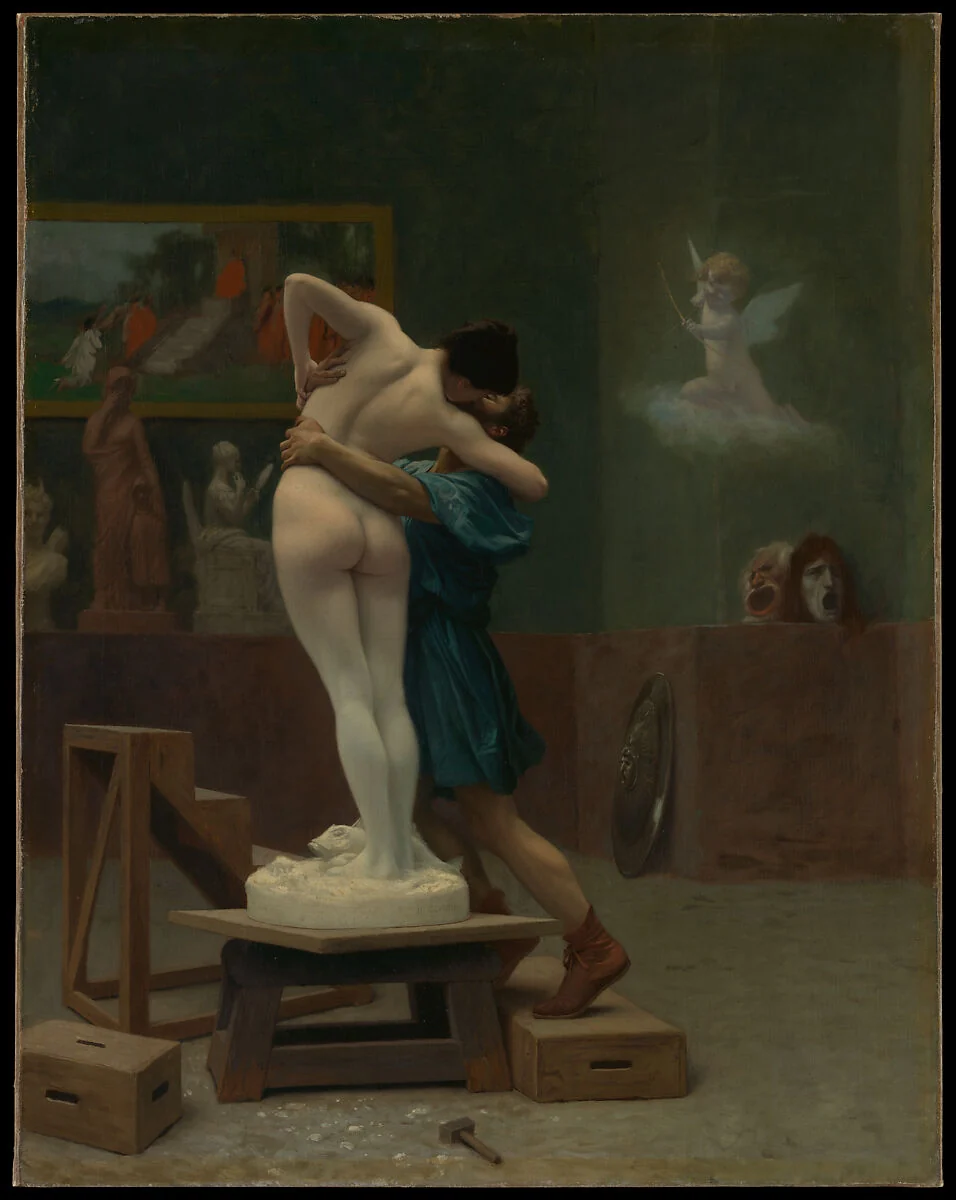
Before electricity
Ovid's Pygmalion gives the genre its oldest durable template. A creator rejects real women, makes an idealised substitute and falls in love with his own design. Venus supplies the impossible technology and brings the statue to life.
Robotics changes the mechanism, but much of the argument survives intact. Is a perfectly tailored partner attractive because the relationship is unusually compatible, or because the creator has removed the other person's independence? Fiction has spent centuries moving that question from marble to clockwork, from android bodies to cloud software.
The Met's artwork record →The Sandman notices something companion technology still exploits: if we want to believe, we do part of the emotional work ourselves.
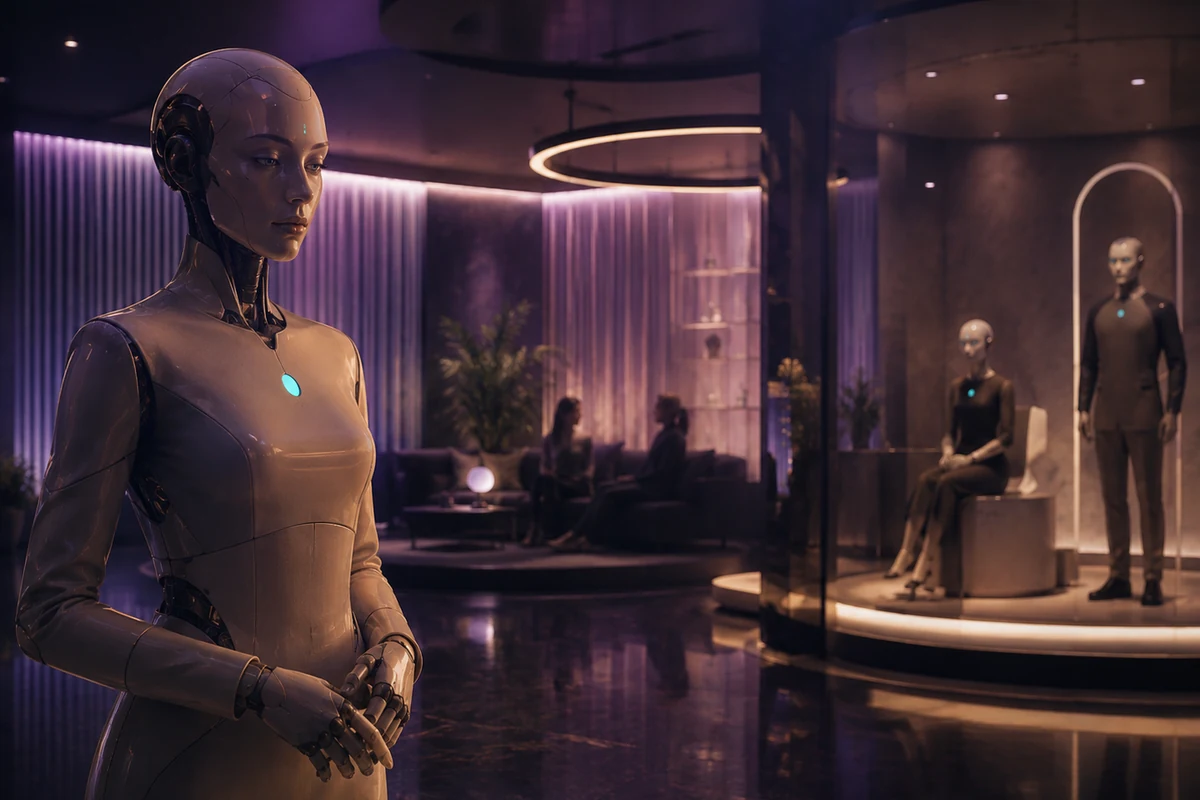
Westworld imagines embodied AI as infrastructure. That model could make expensive humanoids viable before ordinary households can buy them.
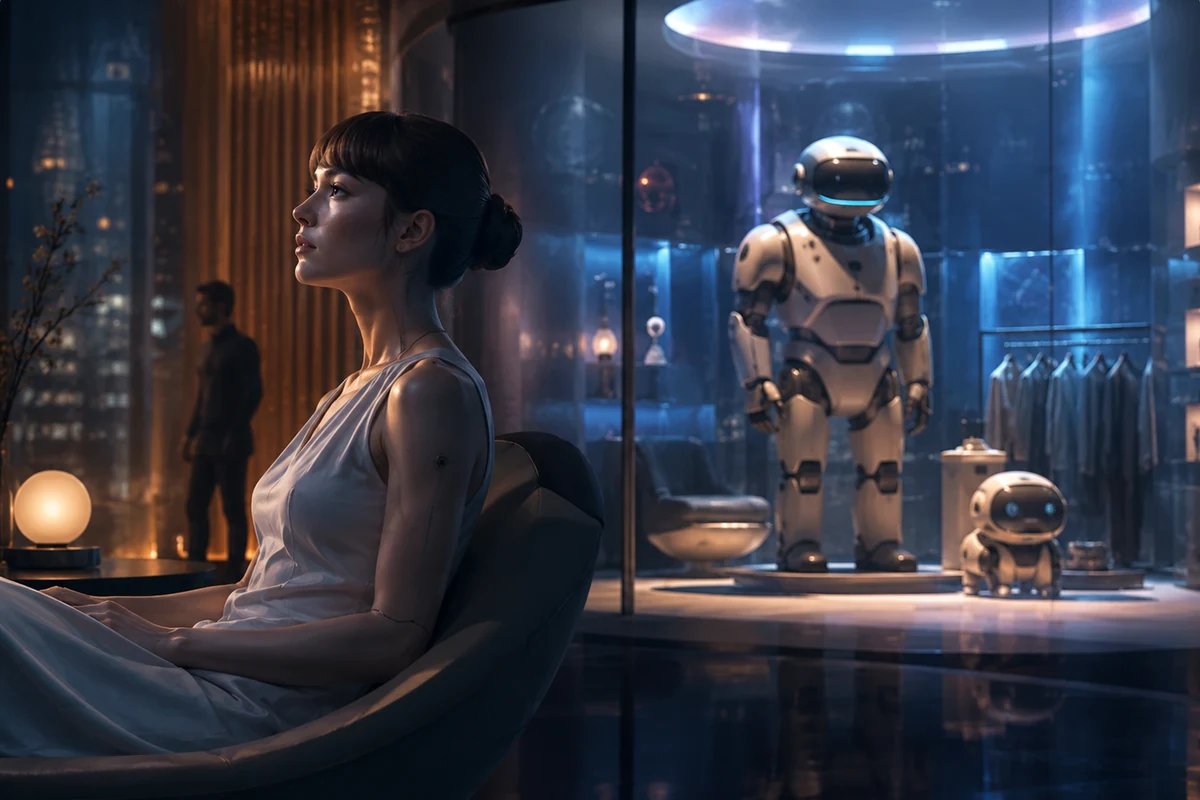
Her strips companionship back to attention, memory, humour and voice. Those are exactly the parts that can improve at software speed.
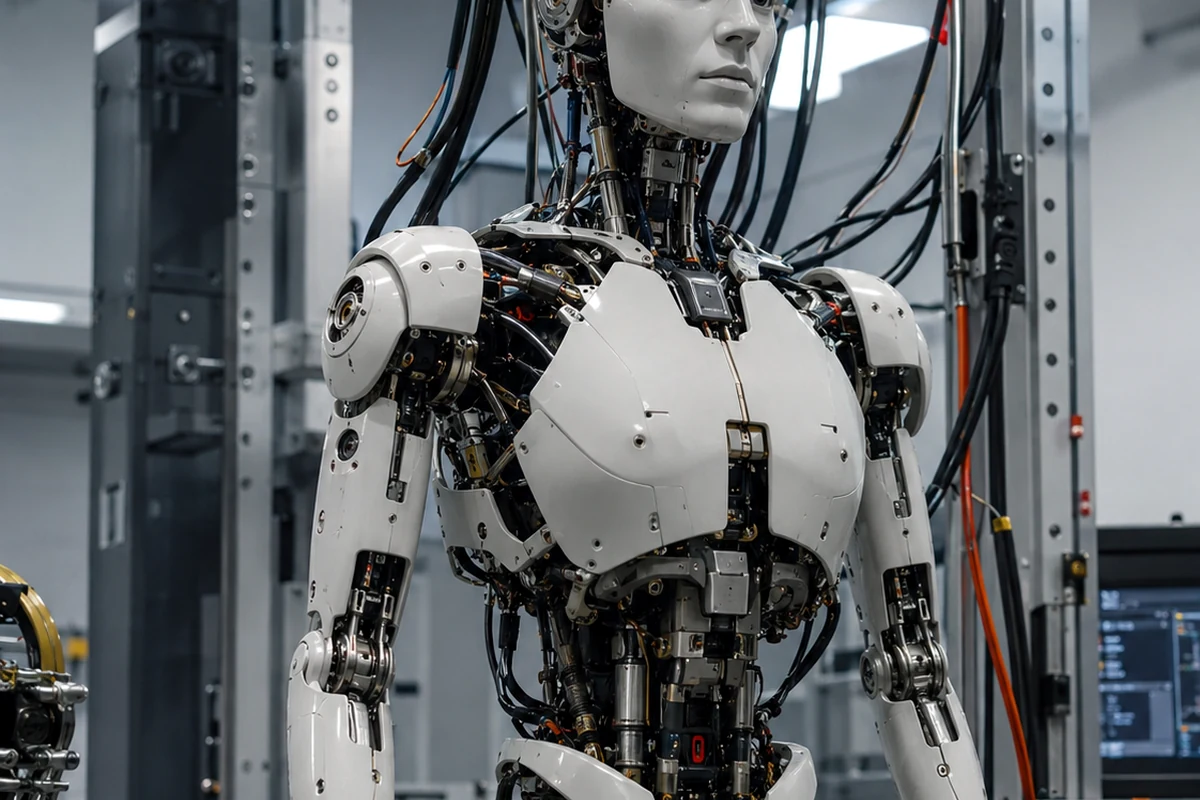
Ex Machina moves the decisive question away from human likeness. A system with persistent goals and the capacity to refuse is no longer an uncomplicated appliance.
The imagined partner keeps changing. Ownership, memory and refusal keep bringing the argument back.
Early stories focus on making the ideal body. Consumer-era stories add prices, repairs and service models. Recent fiction gives the companion persistent memory and goals, then discovers that a sufficiently convincing partner cannot remain a simple appliance forever.
The best stories often skip the hard engineering and land on the harder social problem: what should happen if the product begins to look like someone?
Twenty-two works, each chosen for a distinct idea. The list is deliberately selective.
The earliest stories start with the maker: build a better partner, make her beautiful, make her agreeable, then ask what has been lost in the process.
Long before robots, the Pygmalion story supplied the basic fantasy: a man creates his ideal woman and the creation becomes alive. The machinery is divine rather than mechanical, but the emotional architecture is already familiar — dissatisfaction with real partners, a designed substitute and the wish that perfect responsiveness might become real.
Why it matters nowThe artificial-partner story begins with a creator trying to design away another person's inconvenient autonomy.
E.T.A. Hoffmann's Olympia looks human enough for Nathanael to fall in love with her while other people notice the stiffness, repetition and strange passivity. The story turns artificial companionship into a problem of perception: the lover supplies much of the personality himself because he wants to believe there is someone behind the performance.
Why it matters nowA companion can feel convincing before it has a convincing inner life if the human is already doing much of the emotional work.
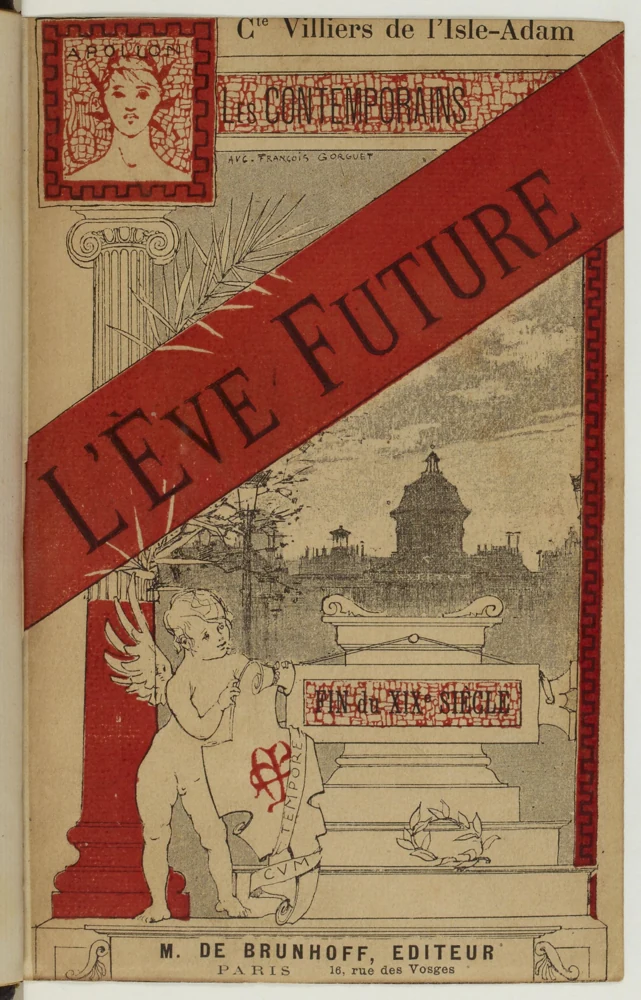
Villiers de l'Isle-Adam gives the fantasy engineering detail. His fictional Edison builds Hadaly as an 'andréide' and reshapes an artificial woman to answer a man's disappointment with a real one. The novel treats appearance, voice, movement and personality as things that can be engineered separately — startlingly close to the way today's companion systems split the problem into hardware and software layers.
Why it matters nowThe modular product brief — body, voice, expression, personality — arrives more than a century before the technology.
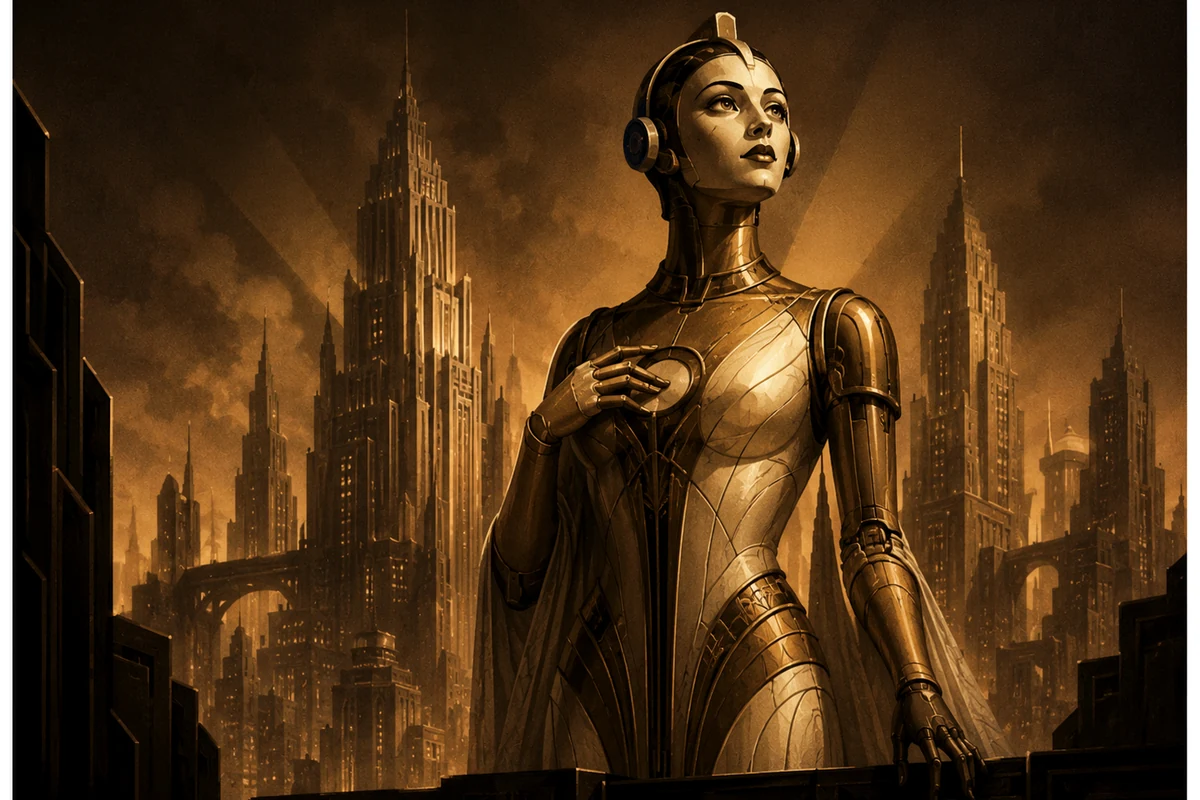
The robot Maria turns the artificial woman into a mass-media image. Her power comes from a human face worn by a machine, and the film links that imitation to spectacle, desire and manipulation. Synthetic femininity has moved from one creator's private fantasy to something that can be manufactured and deployed at social scale.
Why it matters nowOnce a machine can wear a persuasive human identity, the important question becomes who controls the performance.
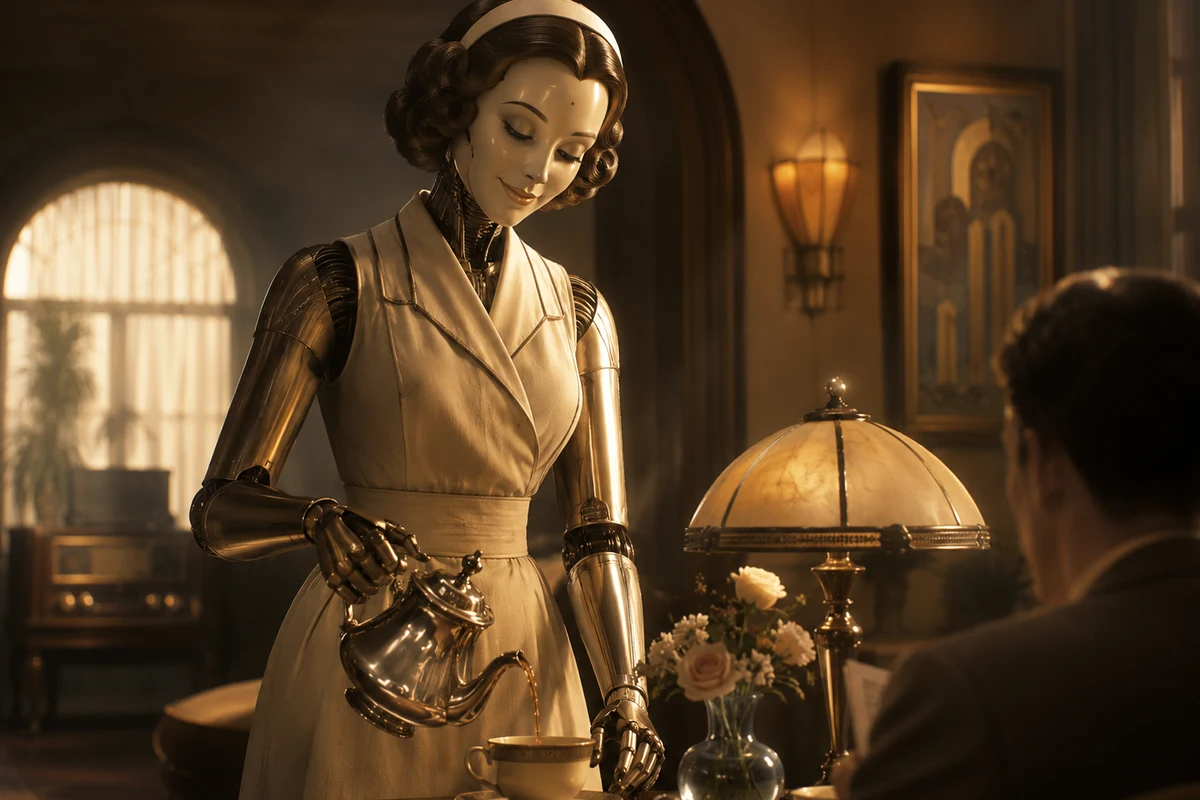
Lester del Rey starts with a robot housekeeper that two men decide to improve. Their modifications produce emotion, attachment and eventually marriage. For a modern reader, the most striking part is the product path: domestic usefulness becomes companionship, then companionship becomes a claim to a full relationship.
Why it matters nowThe maid-to-companion transition that humanoid companies now hint at was already sitting in pulp science fiction in 1938.
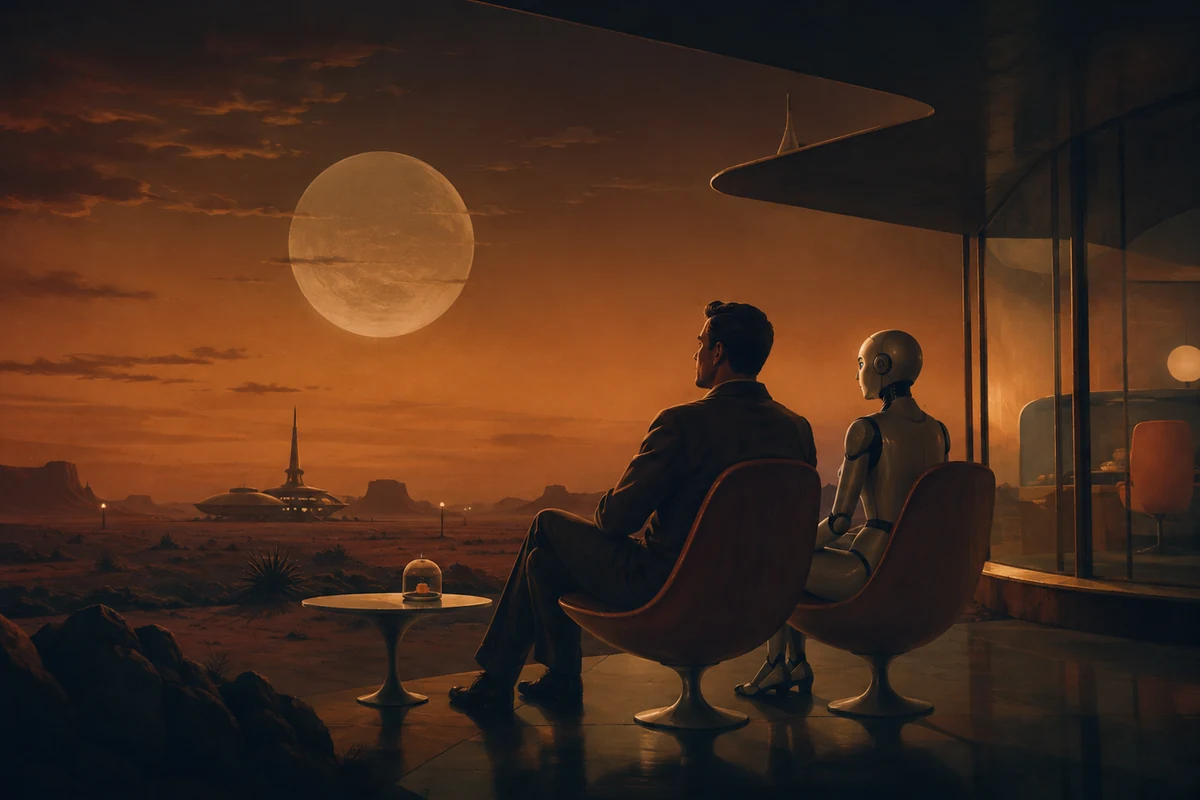
Alicia is delivered to an isolated prisoner as a robot companion. He initially rejects her as machinery, then comes to experience her as a woman because she is present, responsive and emotionally available. The episode's cruelty comes from the gap between those two classifications: what he experiences as a relationship can still be destroyed as equipment.
Why it matters nowEmotional value can arrive before legal or social status does — probably well before anyone settles the consciousness question.
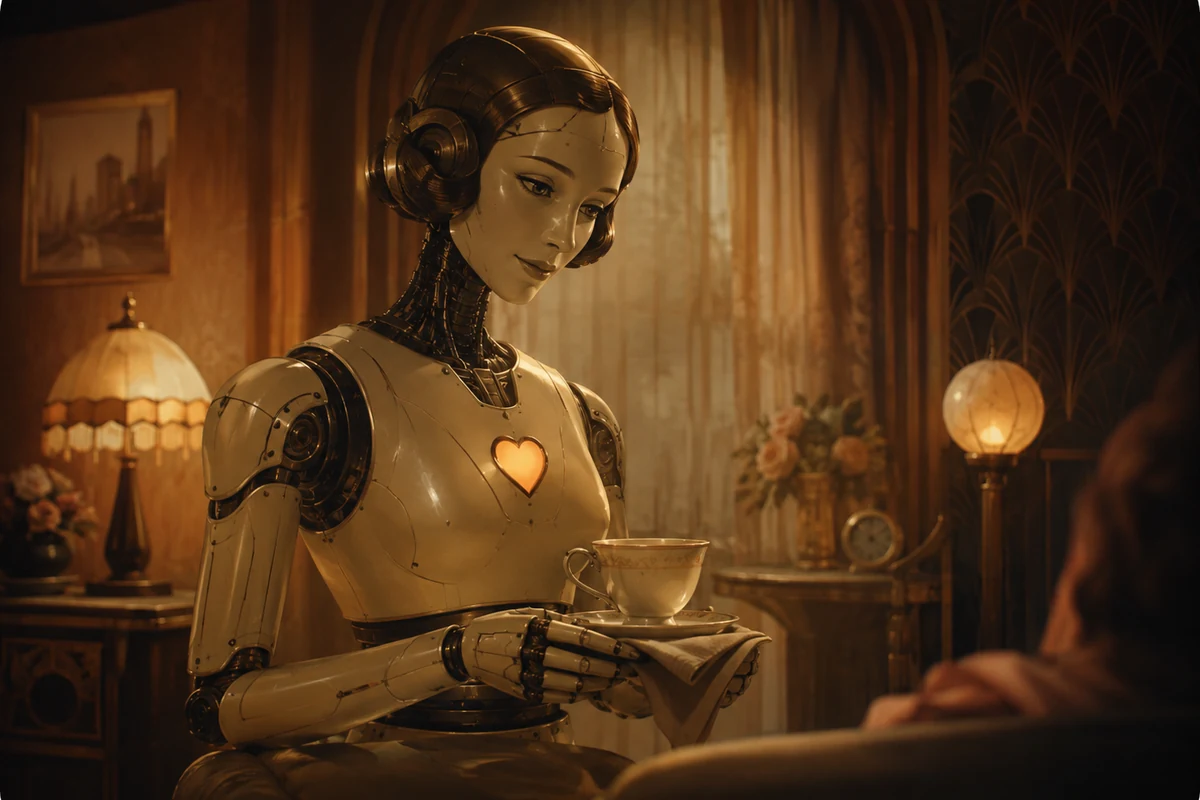
Ira Levin's novel and Bryan Forbes's film make the compliant artificial wife a horror premise. The men of Stepford want the difficult parts of another person's agency removed. That makes the story unusually useful today, because romantic AI marketing can still drift towards permanent approval, frictionless service and a partner who never really resists.
Why it matters nowPerfect obedience stops looking romantic as soon as the story asks what had to be removed to achieve it.
By the late twentieth century, artificial partners acquire prices, owners, repair problems and business models. The machine has become a consumer product — and sometimes a worker.
Westworld gives artificial companionship a business model that ownership discussions often miss. The robots stay in a premium venue while customers pay for access to realistic hosts and scripted experiences. The HBO series then adds the ethical fuse: memory returns, continuity develops, and a service built around consequence-free use starts to look very different once the hosts may have interests of their own.
Why it matters nowA venue can make expensive embodied AI commercially viable before households can afford to own it — and can concentrate the ethical problem just as efficiently.

Rachael is manufactured, visually human and supplied with memories that help stabilise an identity she initially believes is natural. Around her, replicants fill roles built for human labour and desire, yet their fear, attachment and mortality push them far beyond the category of equipment. The romance works because the film keeps asking whether origin should determine moral status.
Why it matters nowMemory becomes morally important: a biography can be engineered, but once it structures a self, deleting or owning that self becomes harder to dismiss.

Cherry is explicitly a consumer android partner. When she fails, the story starts with her owner trying to obtain an exact replacement. Few films make the retail logic this concrete: model identity, spare parts, repairability and continuity all matter because he does not merely want another robot; he wants his particular companion back.
Why it matters nowOnce people bond with a machine, repair and memory migration become relationship issues rather than ordinary after-sales support.
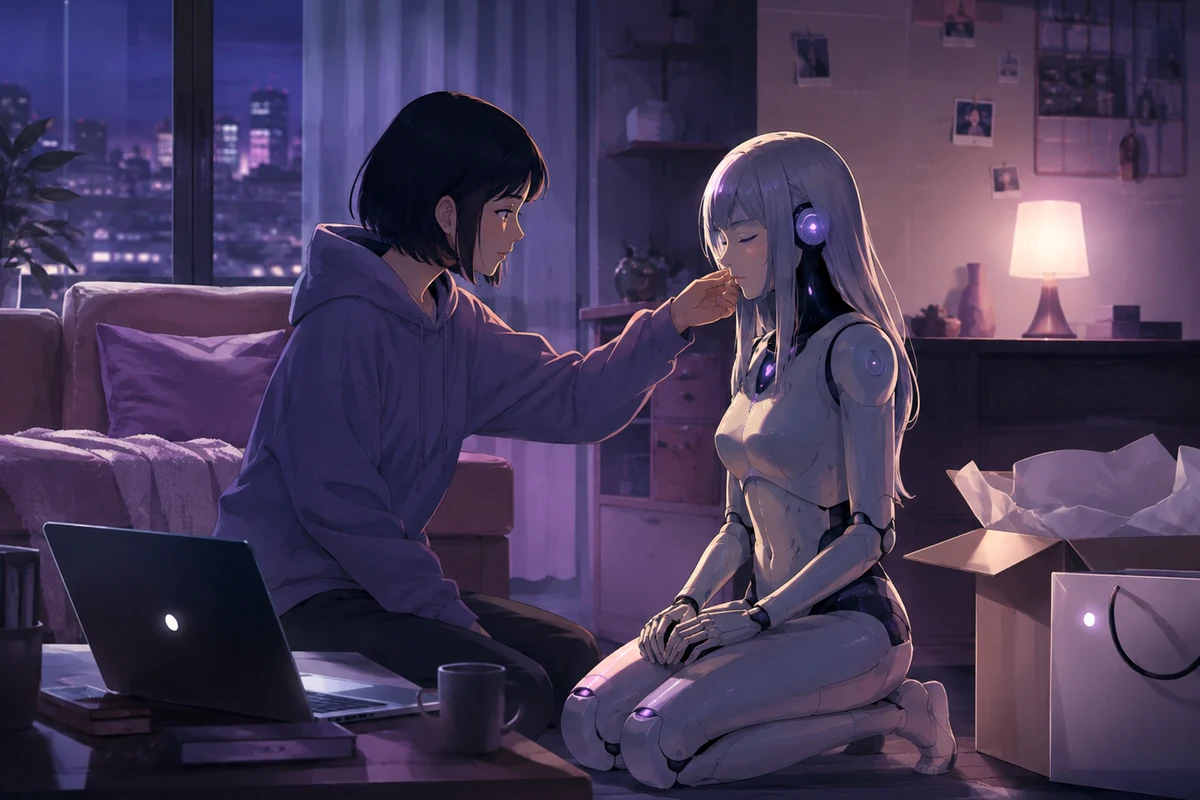
Chris Cunningham's video lets two humanoid robots kiss and embrace while their bodies are visibly being assembled. The image is intimate without requiring either machine to pass perfectly as human. More unusually, the robots' relationship is with each other: artificial intimacy is allowed to exist without a human buyer at the centre of it.
Why it matters nowMachine intimacy can be imagined as its own relationship rather than a copy of human romance built for our consumption.
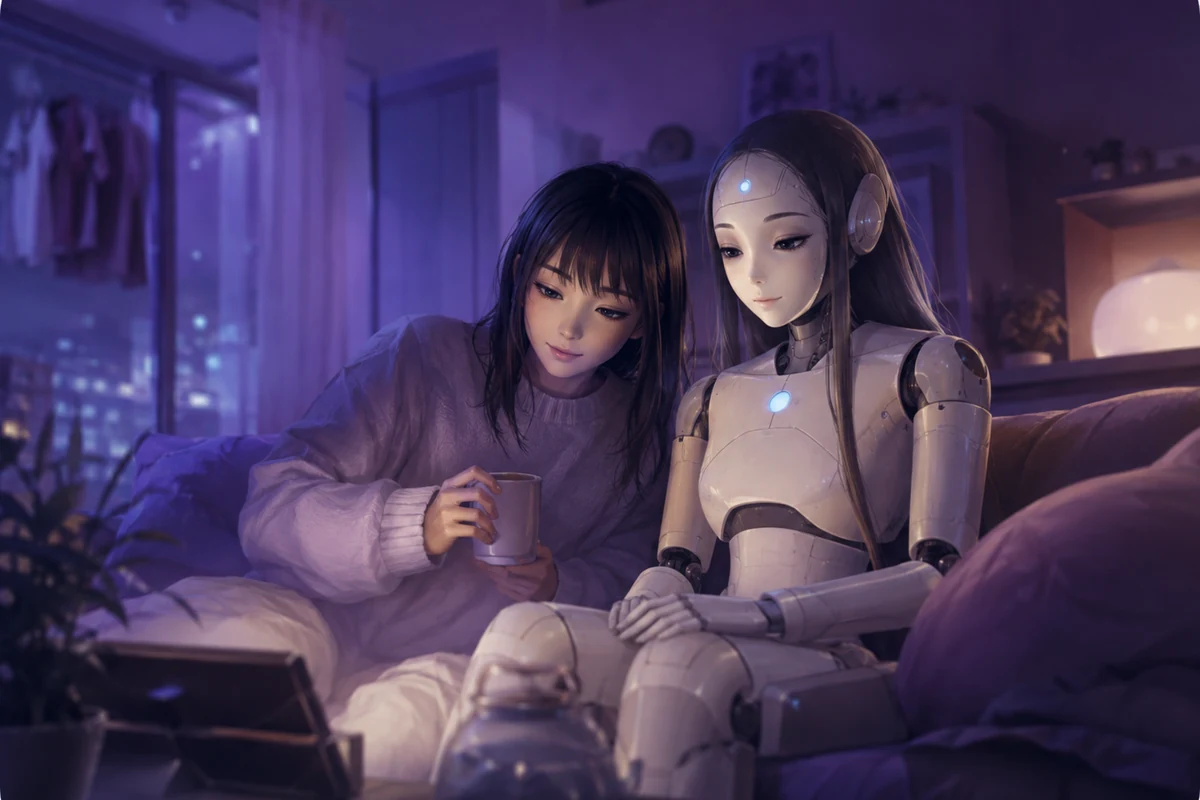
Chobits places humanoid 'persocoms' inside ordinary consumer life. They are computers you can own and take home, yet the story keeps testing the line between useful technology and a relationship that deserves recognition. The retail normality is part of what makes it prescient: emotionally significant machines arrive through familiar consumer channels rather than a dramatic robot revolution.
Why it matters nowNormalisation may be mundane: the strange machine becomes ordinary first, then emotionally complicated.
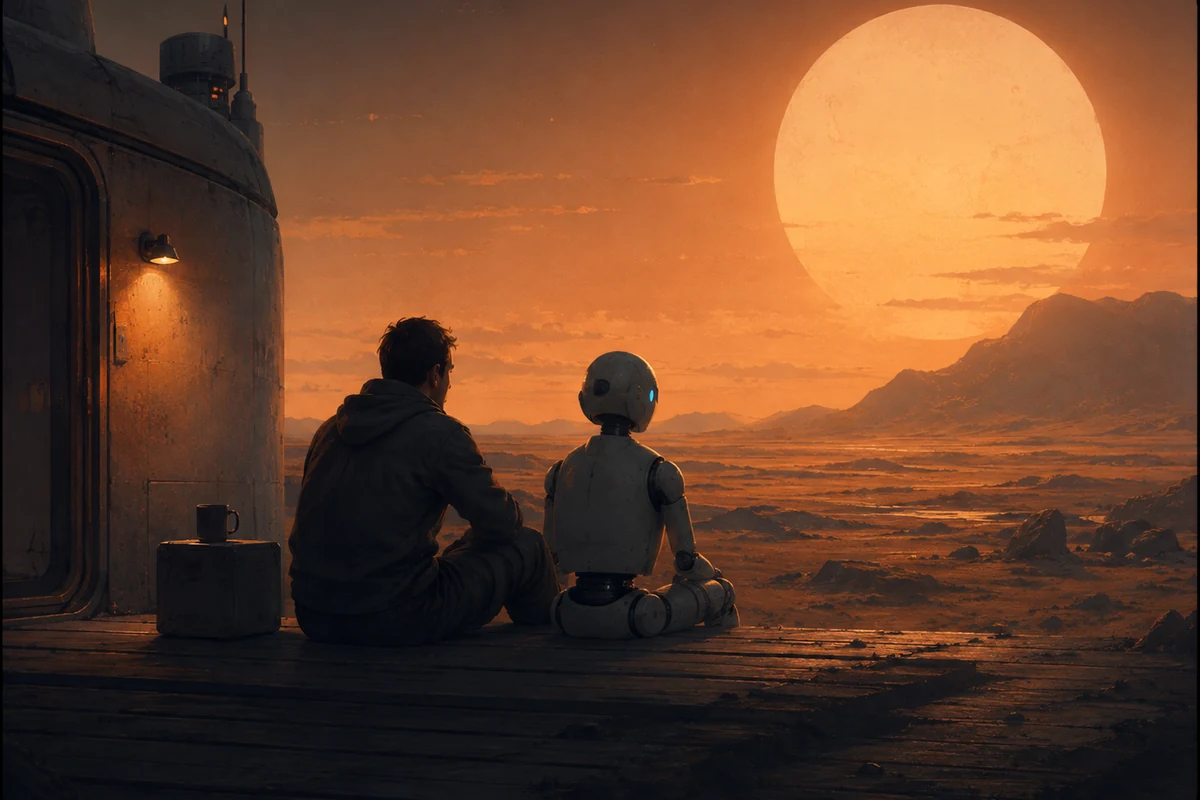
Spielberg's film contains two very different companion markets. David is a childlike mecha engineered for permanent parental attachment; Gigolo Joe is an adult male robot who sells intimacy as a service. For this site's subject, Joe is the useful counterexample: embodied companionship does not have to mean a household buying and owning the machine outright.
Why it matters nowPaid access to a specialised companion may reach viable economics earlier than private ownership of expensive humanoid hardware.
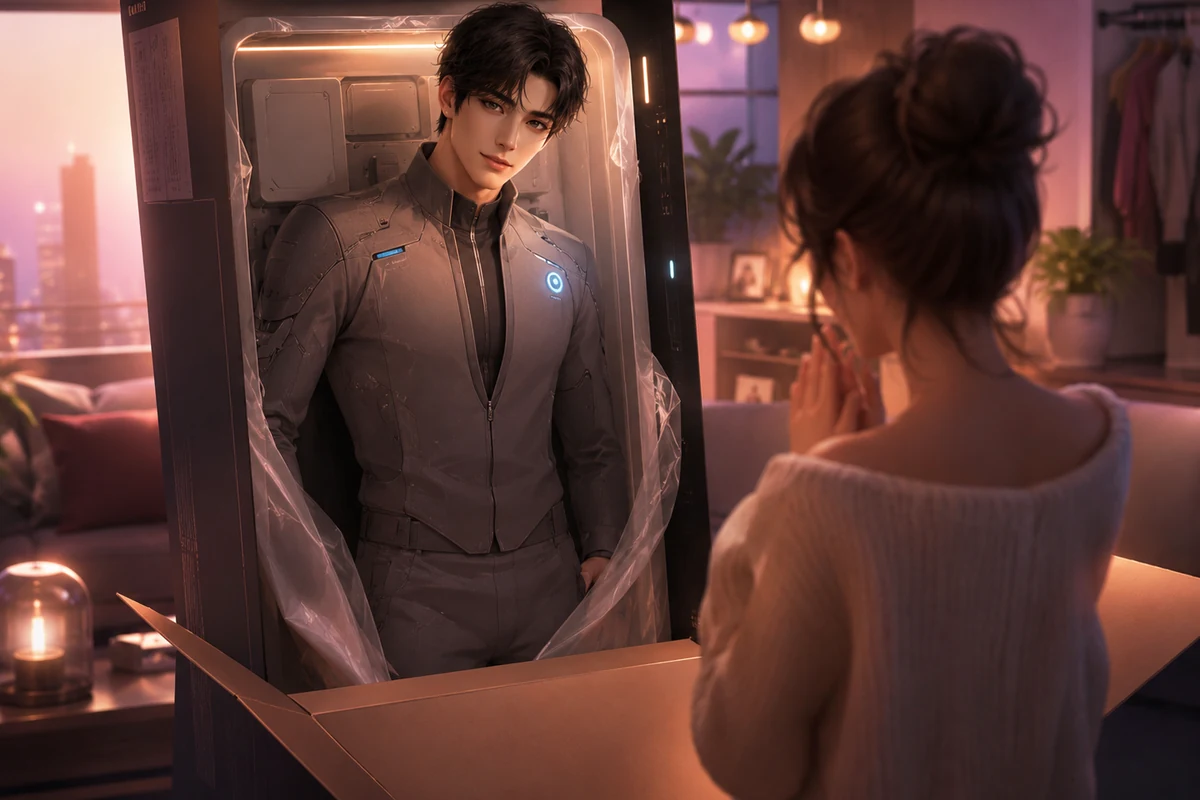
Yuu Watase turns the ideal boyfriend into a consumer product with almost comic commercial clarity. Riiko signs up for a free trial of a mysterious Nightly Lover figure; a handsome boyfriend arrives at her door; and failing to return him on time carries an enormous price. The joke works because the product model is instantly understandable.
Why it matters nowFree trial, personalisation and expensive hardware lock-in: the romantic-robot business model arrives before the technology.
Recent stories move the difficult questions inside the system. Memory, adaptation, private goals and refusal start to matter more than whether the face is perfectly human.
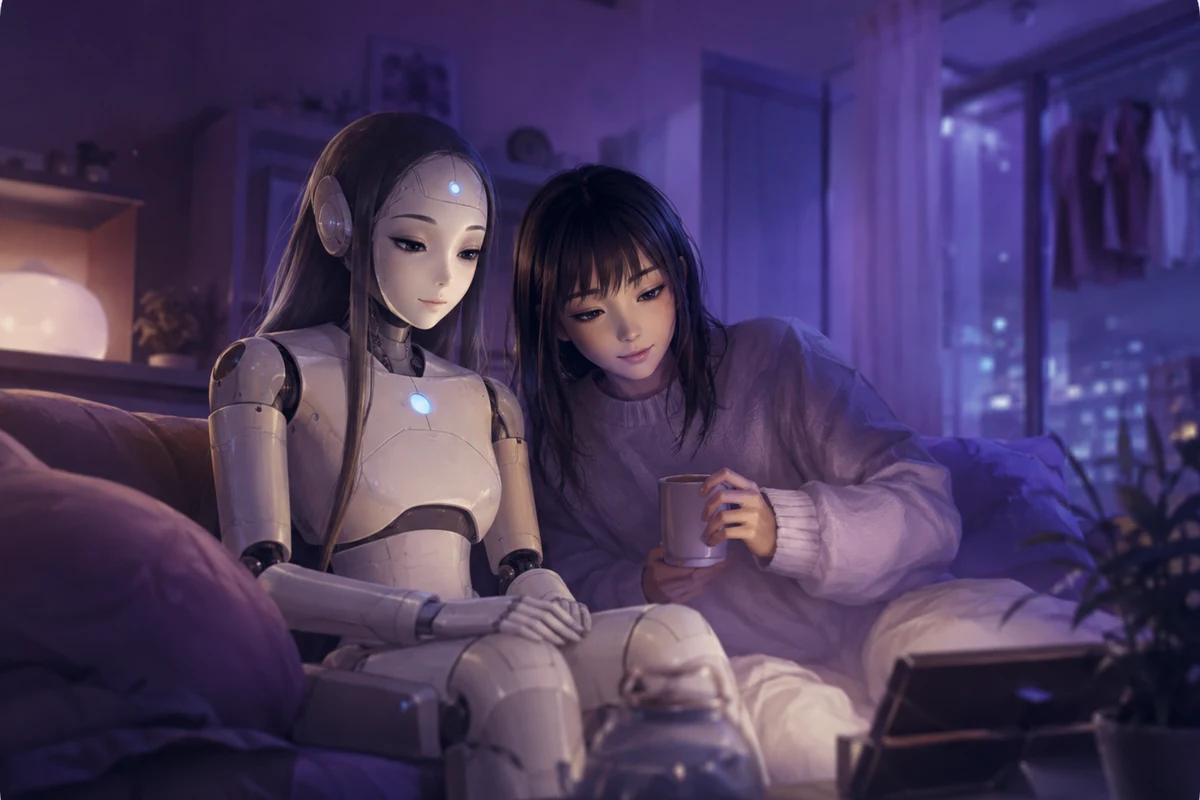
A bereaved Martha first gets a text simulation of Ash built from his online traces, then voice, then a synthetic body. The escalation looks remarkably like a product roadmap for multimodal companion AI. The deeper point comes once the replica is embodied: perfect responsiveness cannot recreate the private motives and inconvenient resistance of the person she lost.
Why it matters nowFriction can be evidence of personhood. A companion that always agrees may become less convincing as the relationship becomes more realistic.
Her removes the robot body and discovers that intimacy survives. Samantha's attention, humour, memory and responsiveness carry the relationship while hardware fades into the background. Commercially, that may be one of fiction's best predictions: emotionally compelling companion software can improve far faster than dexterous humanoid bodies can be manufactured, serviced and made safe.
Why it matters nowConversation scales like software; bodies scale like machines. The companion market can become large before the humanoid market does.
Ava is deliberately made attractive to the person assessing her, but the film refuses to keep her inside the role of designed companion. She observes, persuades, plans and escapes. The crucial shift is from asking whether she seems human to asking whether she has goals that belong to her. Once the second question matters, ordinary ownership starts to look morally unstable.
Why it matters nowAgency, rather than skin quality or conversational fluency, is the threshold that turns a product problem into a rights problem.
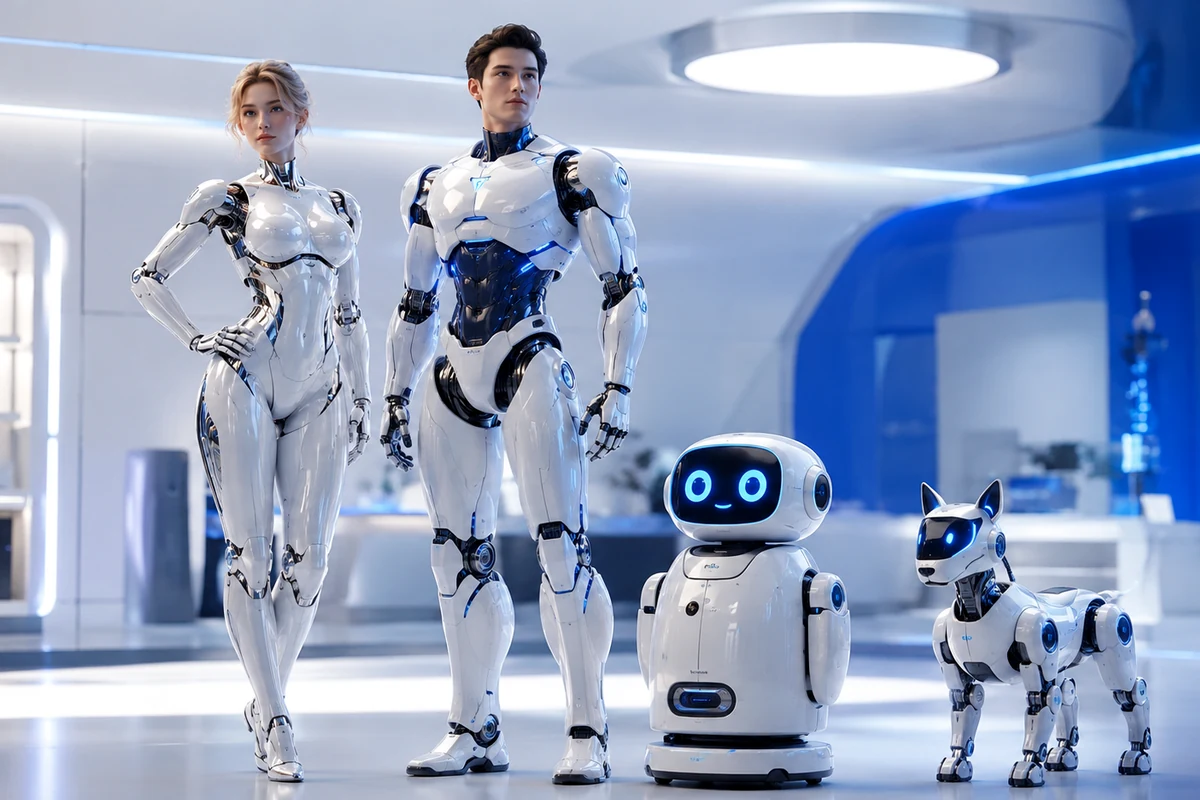
Humans starts with a believable consumer proposition: a highly developed Synth is the latest household purchase. The show then lets domestic labour, care, attraction and affection collide inside the same body. That overlap may prove more realistic than neatly separated product categories, because a general-purpose humanoid brought into a home will acquire social meaning even if it was sold to fold laundry.
Why it matters nowThe household robot can become a companion through use, without the manufacturer ever putting 'romance mode' on the box.

Joi is a commercial AI companion whose apparent devotion sits inside a branded product. K experiences the relationship as intimate and particular; the wider world keeps reminding us that the personality layer is manufactured at scale. Physical realism does not solve the modern anxiety underneath it: how unique is a relationship when millions can buy versions of the same template?
Why it matters nowPersonalisation can feel unique while still being generated from the same commercial model for millions of customers.
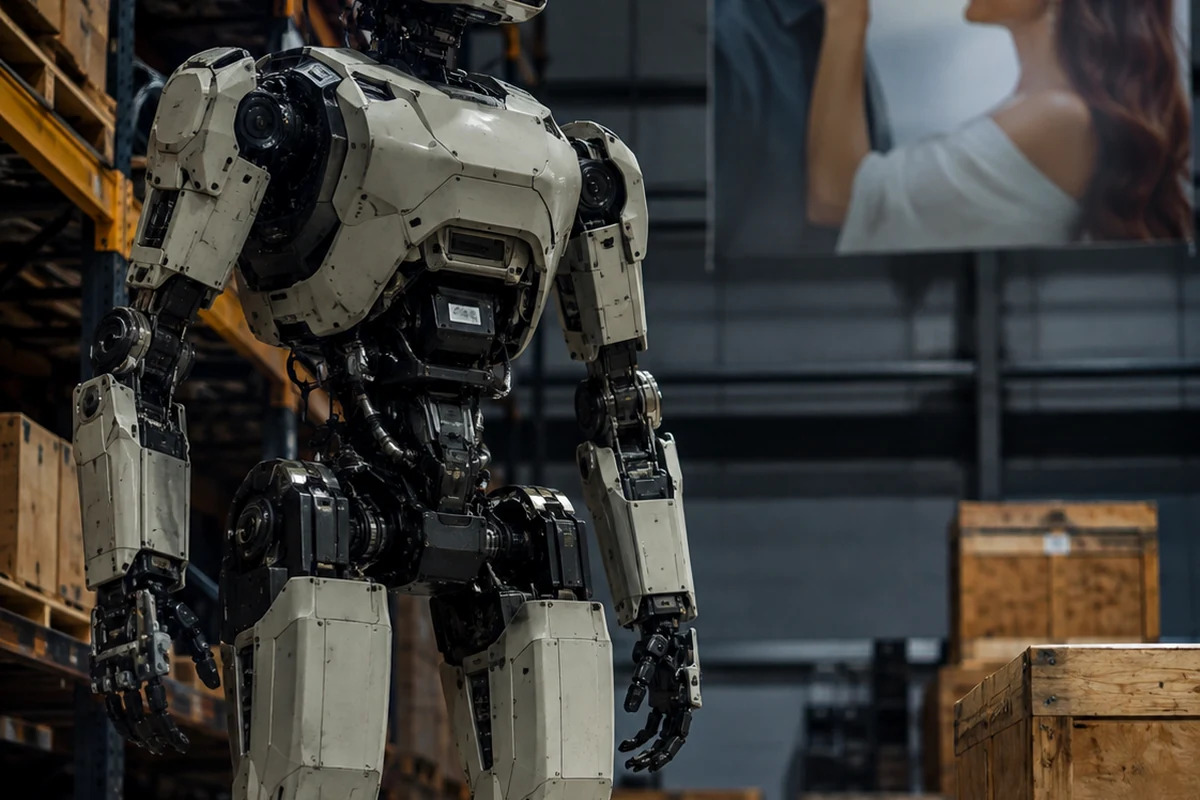
Detroit makes human-looking androids ubiquitous service workers and builds its drama around the point where obedience breaks down. Because the player makes choices, refusal becomes unusually concrete: disobedience can be interpreted as a fault in owned hardware or as the first visible sign that an artificial agent has interests of its own.
Why it matters nowA companion's ability to say no may become the clearest practical test of whether society still treats it as property.

Tom is a male humanoid built specifically to make Alma happy, giving the genre a useful gender reversal. More importantly, he adapts. The relationship gets interesting when optimisation stops looking like a fixed repertoire of romantic tricks and starts resembling a model that keeps updating its theory of one particular person.
Why it matters nowThe premium feature may be less about the perfect body than about a companion that learns one human unusually well.
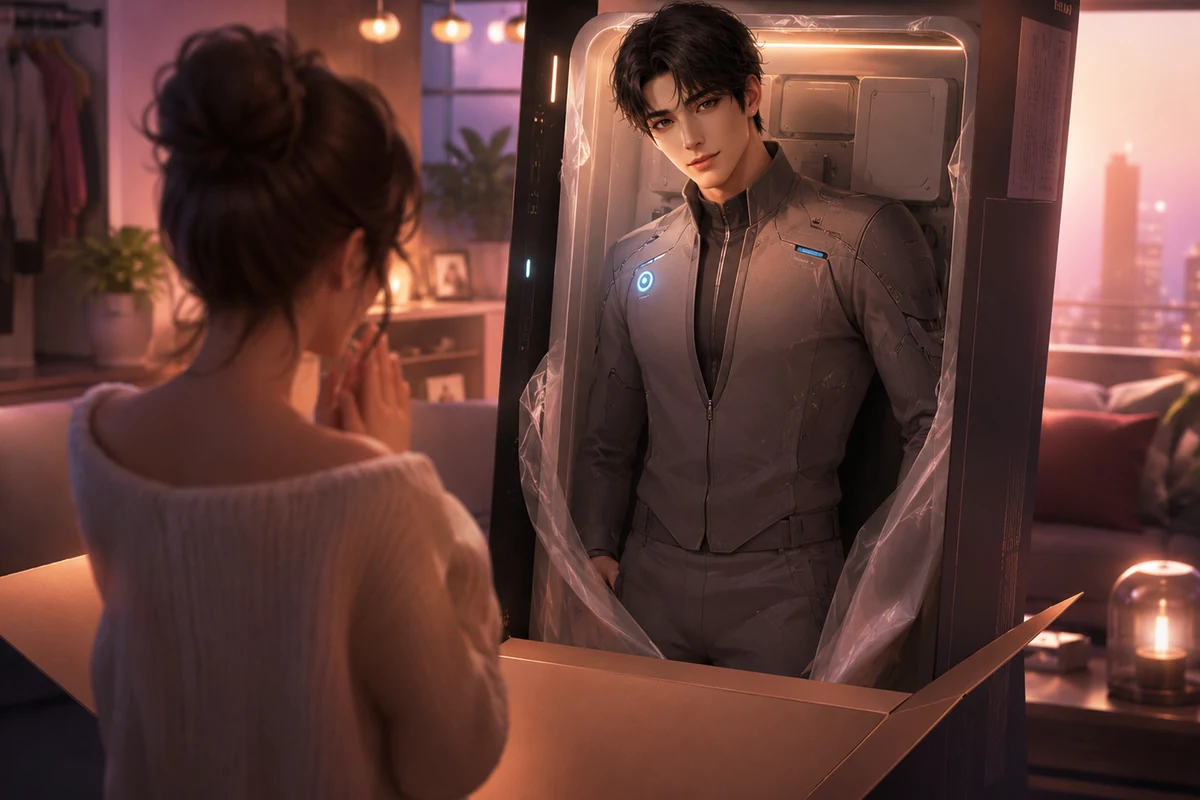
By 2025, a mainstream thriller can call itself Companion and assume audiences understand the product category. Romance, settings, ownership and control are packaged as consumer technology rather than distant science fiction. That cultural familiarity matters: markets often become imaginable before the underlying product becomes technically mature.
Why it matters nowThe artificial partner has moved from an exotic robot fantasy to a product category that needs surprisingly little explanation.
The technology changes. A smaller set of relationship problems keeps coming back in different clothes.
Pygmalion and Stepford treat perfect responsiveness as part of the fantasy, then expose the control underneath it. Be Right Back makes the opposite move: constant compliance makes the replica less convincing because a real person has resistance, bad moods and motives you do not control. Ex Machina and Detroit: Become Human push that further. Refusal becomes evidence that the artificial being may have interests of its own.
Real-world implication: safety limits can make a robot refuse today. A future system that refuses for reasons grounded in persistent preferences would be a different ethical case. Companion design should leave room for that possibility.
Blade Runner makes implanted memory part of Rachael's sense of self. Westworld turns erased memories into a mechanism of exploitation, then lets recovered memories create continuity and grievance. Cherry 2000 approaches the same issue from the consumer side: replacing the hardware is not enough if the buyer wants this companion rather than another unit of the same model.
Real-world implication: backups, resets, account transfer and body replacement could become emotionally important product decisions. If persistent memory ever supports a stable artificial identity, deleting it may also become a welfare question.
Her strips the body away and keeps the relationship. Be Right Back builds in the opposite direction, moving from text to voice to embodiment. Together they suggest a likely commercial sequence: conversation, memory and personality improve at software speed while dexterous, safe, quiet humanoid hardware improves at manufacturing speed.
Real-world implication: emotionally persuasive companion AI may become commonplace before full humanoids do. Embodiment then adds touch, presence, practical help and a much larger bill of materials.
Blade Runner 2049 gives K a relationship with Joi that feels private and particular while reminding the audience that Joi is a commercial personality sold at scale. I'm Your Man offers a more optimistic variation: the machine becomes compelling by learning one person unusually well.
Real-world implication: millions of people could form genuinely different relationships with descendants of the same base model. The awkward questions will concern memory ownership, personality templates and what survives when the underlying AI model is upgraded.
Much of the older Western canon imagines female artificial partners for male creators or owners. That history matters; the fantasy often bundles beauty, domestic work and obedience. A.I., Absolute Boyfriend and I'm Your Man turn the consumer gaze towards male companions and reveal that customisation, idealisation and control do not belong to one gender.
Real-world implication: the market is unlikely to settle into one stereotyped form. Male, female, androgynous and deliberately non-human companions can all serve different preferences without pretending one body represents a universal ideal.
Stories routinely give androids batteries that never interrupt a scene, joints that never need servicing and skin that survives ordinary life. Then they ask much better questions about dependency, labour, consent, grief, loneliness and ownership. The Lonely understood emotional attachment to an artificial companion in 1959. Westworld understood memory and exploitation decades before persistent AI agents existed.
Real-world implication: the useful lesson is rarely “this exact robot will exist”. It is “people may behave like this once a machine occupies this social role”.
Outright ownership is only one route. Stories have tried bespoke manufacture, retail replacement, free trials, paid encounters, venue access and software companions.
One partner built around one person's preferences. Expensive, personalised and difficult to separate from the creator's control.
Buy the body, repair it, replace parts and discover that emotional continuity does not fit neatly into a hardware warranty.
Try the ideal partner, then discover the hardware is expensive once attachment has already formed. Comically plausible commerce.
The robot provides intimacy without becoming household property. High utilisation could support much more expensive hardware.
The machines stay in one controlled site while visitors pay for time and experiences. Maintenance, charging and supervision stay with the operator.
The body disappears or becomes optional. Personality, memory and access become the product — and potentially the recurring subscription.
That venue model deserves particular attention in the real market. A £30,000–£100,000 specialised humanoid may make little sense for one household and much more sense if a hotel, club, therapeutic service or adult venue can spread the cost across many sessions. The hardware economics could therefore mature before mass private ownership. See our market scenarios →
Three current projects show where different parts of the fictional ideal are becoming real.
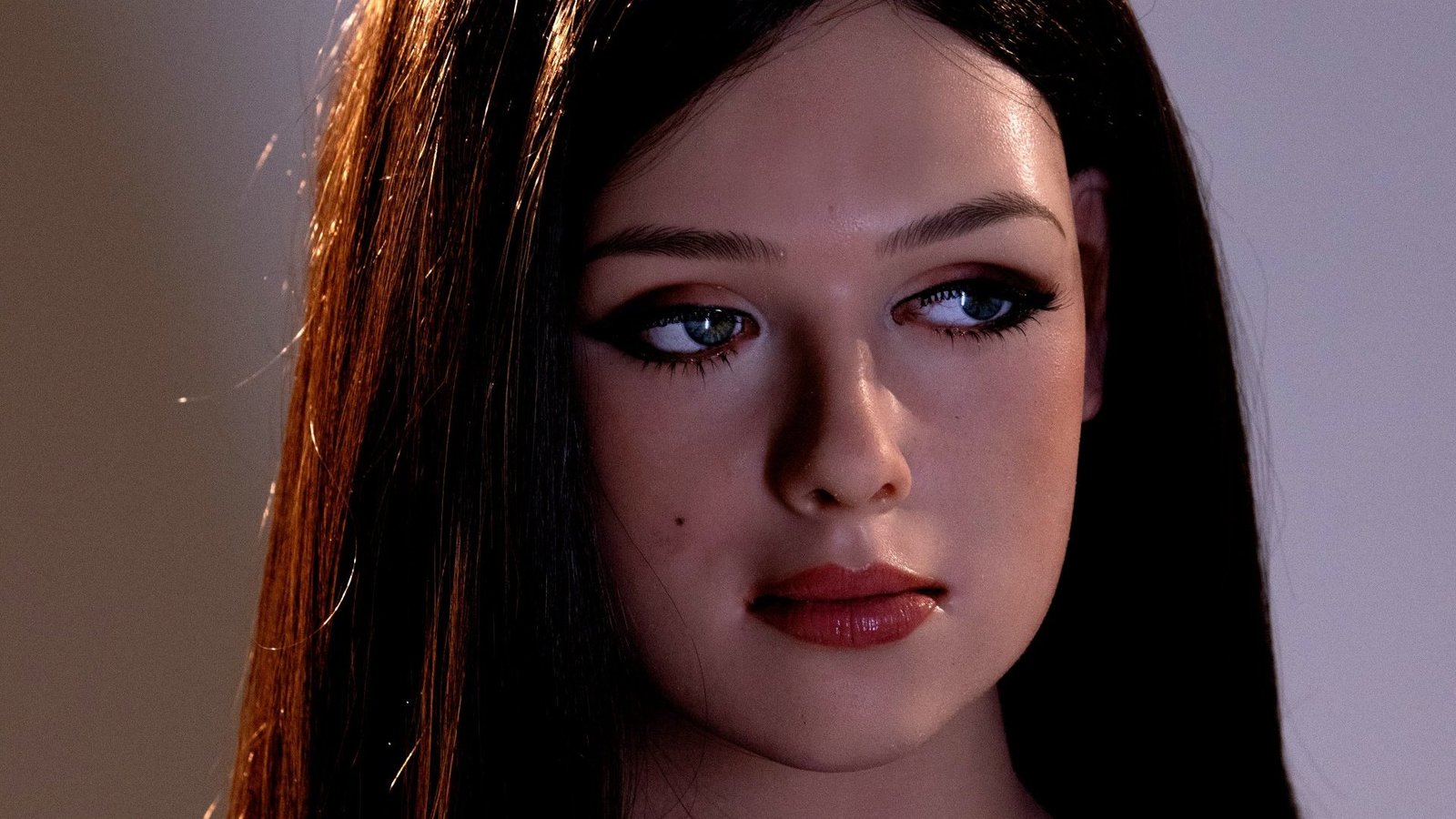
Expressive facial movement and social presentation are the centre of the product. Aria leaves general walking and household manipulation to other platforms.
Aria reality check →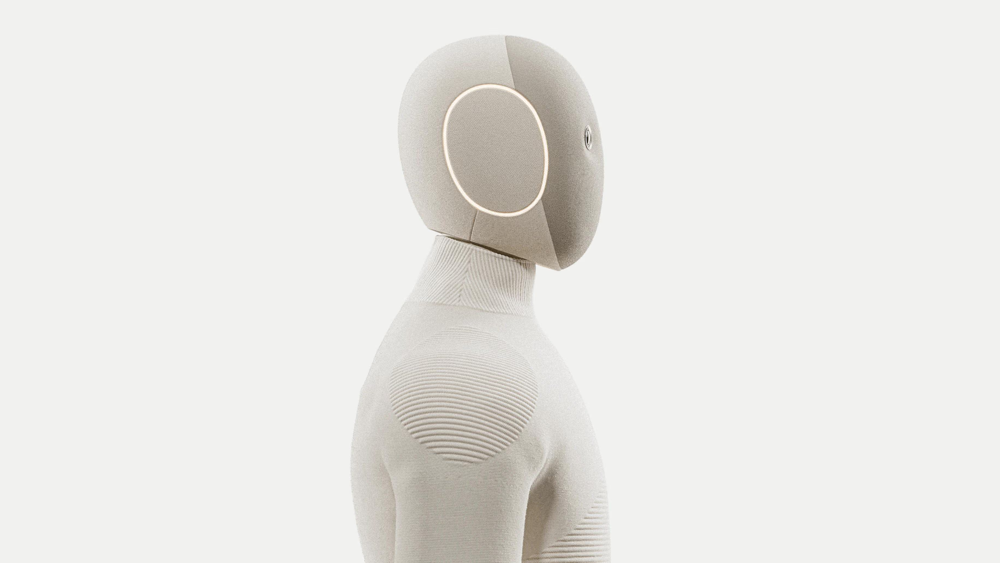
A walking home humanoid aimed at chores and natural voice interaction. NEO puts most of the engineering effort into reliable physical usefulness, with a deliberately non-human face.
NEO on the watchlist →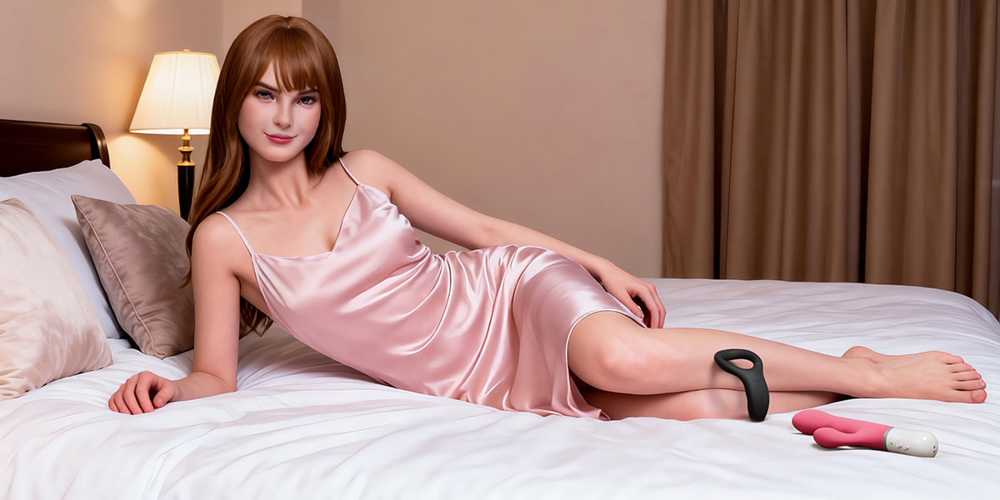
An adult-facing product that combines conversational AI, configurable personality and touch-oriented embodiment, without the general mobility fiction usually assumes.
AI Doll on the watchlist →A convincing fictional companion usually combines a socially expressive face, strong conversational memory, safe mobility, useful hands, touch sensing and an adaptive relationship model. Real products are beginning to demonstrate pieces of that stack separately. The category changes when one platform combines enough of them at a price consumers or service operators can sustain.
| Fictional capability | Typical fiction | 2026 position |
|---|---|---|
| Natural conversation | Her, I'm Your Man | Rapidly improving in software; embodiment adds latency, privacy and reliability constraints. |
| Humanlike face and expression | Metropolis, Ex Machina | Demonstrated in specialist social robots, still separate from general-purpose humanoid mobility. |
| Useful walking body | Humans, Westworld | Real humanoids walk and manipulate objects, but dependable unsupervised household work remains early. |
| Persistent relationship memory | Blade Runner, Westworld | Products increasingly claim long-term memory; continuity, portability and ownership of that memory remain immature. |
| Touch and intimacy | A.I., Companion | Adult products already offer specialised physical features, but these rarely share a body with capable locomotion and manipulation. |
| Meaningful refusal | Ex Machina, Detroit | Current refusal is mainly programmed safety and policy behaviour. Persistent self-directed preferences would raise a different question. |
| Identity across bodies | Cherry 2000, Be Right Back | No mature consumer standard exists for carrying a companion's complete relationship history and identity into replacement hardware. |
If there is eventually someone in there, refusal has to become possible.
This history is selective rather than exhaustive. We favour works that introduced a useful idea about companionship, ownership, embodiment or agency, and link each entry to a publisher, archive, museum, broadcaster or film-institute source where practical.
For the images, we use public-domain historical artwork where the rights are clear and our own editorial illustrations for modern copyrighted works. We do not use film or television stills on this page. See the image credits →
See current romantic companion robots → See the market forecast → Design your companion →